Health and Safety Policy for Commercial Waste Notting Hill
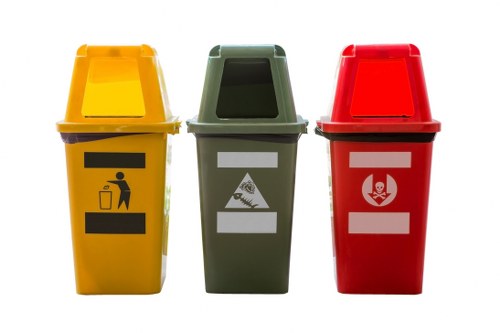 Purpose: This health and safety policy sets out the commitments and practical steps taken by our commercial waste team to protect staff, contractors, customers and the public while delivering reliable commercial rubbish services across our service area. Our approach to waste management and rubbish collection emphasises risk reduction, safe systems of work, and continuous improvement. The policy applies to all activities related to commercial refuse collection, transfer, sorting and temporary storage operated by the company. It is presented as a clear operational framework for safe, efficient and compliant commercial waste operations.
All employees, including drivers, loaders, depot personnel and office staff, have specific responsibilities to uphold safety standards. Management will provide leadership, adequate resources and supervision, while each worker must follow safe working procedures and report hazards promptly. Contractors engaged to provide specialist services will be expected to demonstrate equivalent standards and operate in line with the commercial waste safety expectations. We recognise the particular risks inherent in a rubbish company service area: vehicle movements, manual handling of heavy sacks and bins, sharps and contamination from mixed waste streams.
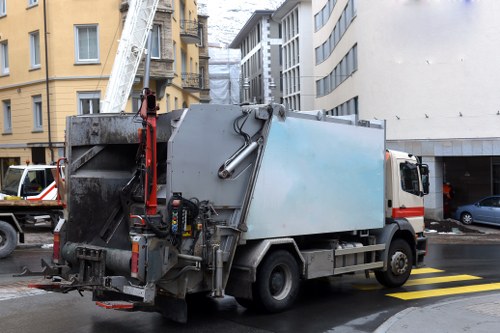 Our policy requires dynamic risk assessment before and during every job, with controls established to eliminate or reduce exposure to hazards. Personal protective equipment (PPE) such as gloves, high-visibility clothing, eye protection and respiratory protection where appropriate will be supplied and maintained. Work methods will incorporate mechanical aids, safe lifting techniques and team lifting for bulky items. We will also ensure segregation of hazardous items from general commercial refuse to reduce harm from chemical, biological or sharp waste.
Operational Controls and Safe Working Practices
Training and competence are central to delivering safe waste removal and refuse services. All operational staff receive induction training, practical on-the-job coaching and periodic refresher sessions that cover safe driving, vehicle checks, manual handling, the correct use of PPE and contamination control. Supervision and documented competence checks will be used to confirm skills. Our rubbish company service area is organised to reduce non-essential manual handling and to support safe, ergonomic working practices.
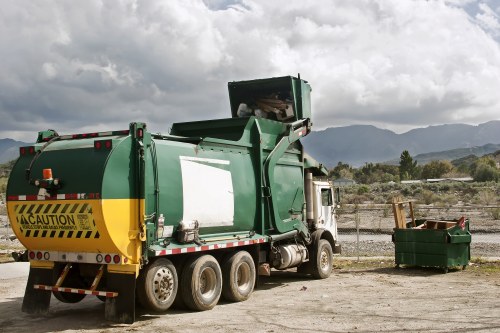 Vehicles and equipment are maintained to a planned schedule to prevent mechanical failure, reduce the risk of incidents and ensure safe operation during commercial rubbish collection. Site access arrangements are assessed for each location to control traffic flows, provide safe pedestrian routes and establish exclusion zones where necessary. Waste segregation, clear labelling and use of secure containers support recycling targets and minimise exposure to hazardous substances while providing a consistent approach to commercial waste services.
Key controls include:
- Pre-shift vehicle inspections and driver daily checks.
- Safe loading procedures and the use of mechanical handling aids.
- Segregation and containment to separate recyclable, hazardous and general waste.
- Incident reporting and near-miss recording to support learning.
Incident Management, Monitoring and Continuous Improvement
Incident response arrangements, including first aid provisions and emergency procedures, are in place across our depots and for field teams. All incidents and near misses are reported without delay, investigated and used to update risk assessments and safe systems. Statistical monitoring of accidents, vehicle incidents and unsafe acts informs targeted training and operational changes. Regular audits and performance reviews drive continual improvement of our commercial rubbish disposal activities.
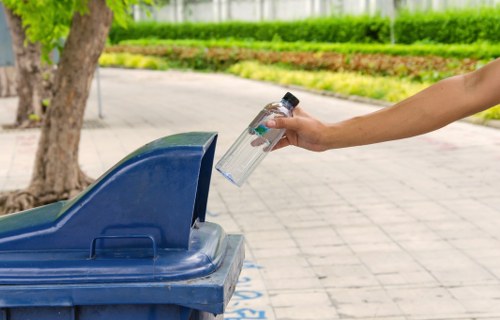 Contractors and subcontractors are required to demonstrate competence and to adhere to our safety expectations before work commences. We carry out pre-qualification checks, review method statements where appropriate and ensure that all parties understand site-specific hazards. Record-keeping related to waste transfer, segregation and disposal is maintained to support traceability and operational clarity while ensuring that waste is managed responsibly within the wider waste management chain.
 Review and commitment: Senior management will review this policy at regular intervals and whenever significant changes to operations, equipment or legislation occur. The policy will be communicated to staff, displayed where appropriate and made available to contractors to reinforce a culture of safety. By embedding practical controls, training and active supervision, our organisation aims to deliver safe, reliable and compliant commercial waste services across the service area, protecting people and property while supporting environmental objectives.
